
Rear-End Collisions Lawyer Miami
The severity of rear-end accidents is often underestimated because the accident appears to be less dramatic than other types of collisions. However, a rear-end accident can lead to serious injuries that can significantly affect your life.
If you need an injury attorney in Miami, call Bernstein & Maryanoff for results you can trust.







Our Proven Results Speak for Themselves
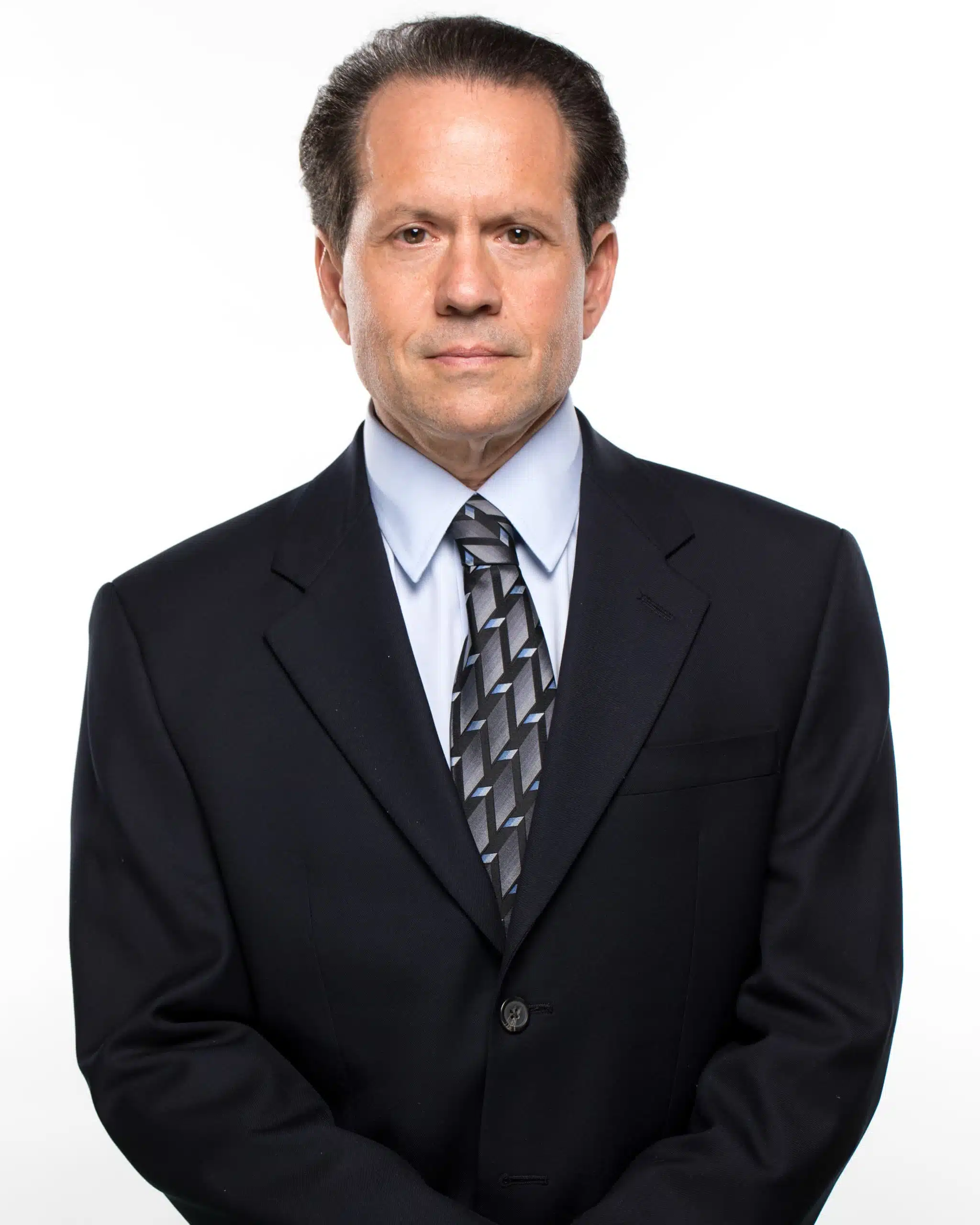
Since 1983, Jack G. Bernstein has fought for injury victims seeking compensation. He’s involved in every personal injury case handled by the experienced attorneys at his law firm, providing expert oversight for the personal injury lawyers at Bernstein & Maryanoff, and helping to ensure clients recover the maximum compensation available.
$3 million settlement
Wrongful death in motor vehicle accident.
$3 million settlement
Secured for a client with neck injuries in car accident.
$2.76 million Settlement
Wrongful death in motor vehicle accident.
$2.25 settlement
secured for a client with paralyzed in medical malpractice.
$2 million settlement
secured for a client with brain injury in medical malpractice.
$1.75 million Settlement
Secured for a client with burns and dystrophy in slip and fall accident.
If you were hit from behind in a Miami rear-end collision, you already know how fast a normal commute turns into a medical and financial mess. Rear-end crashes account for roughly 29 percent of all police-reported collisions nationwide, according to NHTSA crash data, and South Florida’s congested highways make them even more common here.
At Bernstein & Maryanoff, our personal injury lawyers represent rear-end accident and injury victims across Miami, Miami Beach, Miami-Dade County, Fort Lauderdale, and Coral Gables. We work on a contingency-fee basis, so you pay nothing unless we recover compensation for you. Call today for a free, no-obligation consultation.
What is a rear-end collision?

A rear-end collision happens when the rear vehicle strikes the back of the car in front of it. The front vehicle is usually stopped, slowing, or moving at a reduced speed when the crash occurs. The NHTSA 100-Car Naturalistic Driving Study found that the vast majority of rear-end crashes follow the same pattern: the rear driver fails to react to a change in traffic speed ahead.
In Miami and across South Florida, most rear-end accidents happen at traffic lights, stop signs, highway merge points, and during rush-hour congestion on I-95 and the Palmetto Expressway. Even a low-speed rear-end accident can cause real injuries. Whiplash, herniated discs, and concussions often do not show symptoms for hours or days after the crash occurred. That delay does not make the injury any less serious, and it does not reduce what an at-fault driver owes you.
Common Causes Of Rear-End Collisions In Miami
Many rear-end collisions in Miami trace back to a handful of driver mistakes. Here are the four most common causes our personal injury lawyers see in rear-end collision cases.
Distracted driving and reaction time
NHTSA’s 2023 Distracted Driving Research Note reports that 3,208 people died and an estimated 315,167 were injured in distraction-affected crashes in a single year. Sending or reading a text takes a driver’s eyes off the road for about five seconds. At 55 mph, that covers the length of a football field. Looking at a phone, changing music, or talking to passengers all cut reaction time and are a leading cause of rear-end crashes in Florida.
Driving under the influence or fatigue
Drivers impaired by alcohol, drugs, or drowsiness brake later and react slower, according to the FLHSMV Impaired Driving Annual Report. Florida tracks impaired-driving crash counts by substance each year, and the numbers remain high. A drunk driving accident at any speed can easily become a rear-end collision when the impaired driver simply does not notice stopped traffic.
Tailgating and safe following distance
Under Florida Statute 316.0895, a driver must not follow another vehicle more closely than is reasonable given the speed of both vehicles and road conditions. Failing to maintain a safe distance is a direct violation of Florida law and one of the primary reasons rear-end crashes happen on congested Miami highways.
Speeding and sudden stops
The FLHSMV Florida Traffic Crash Facts 2023 shows that speeding and failure to obey traffic signals remain top contributing factors statewide. A driver who exceeds the speed limit or runs a red light cannot stop in time when the vehicle ahead brakes suddenly.
Who Is At Fault In A Miami Rear-End Accident?
Fault in a rear-end collision is not always as straightforward as people assume. Florida law starts with a presumption, but that presumption can be challenged.
The rebuttable presumption against the rear driver
Florida courts generally presume that the rear driver is at fault for a rear-end collision. The reasoning is simple: if you were keeping a safe distance and paying attention, you would have stopped in time. The Florida Supreme Court confirmed this rule in Cevallos v. Rideout, 107 So. 3d 348 (Fla. 2012), but also made clear that the presumption is rebuttable. The rear driver can present evidence to shift fault.
When the front driver shares fault
The rear driver is not always 100 percent at fault. The front driver may share fault if they made a sudden, unexplained stop, reversed without warning, performed an illegal lane change, or had non-functioning brake lights. These circumstances, recognized in Cevallos v. Rideout, can shift some or all liability to the front vehicle. Our attorneys regularly dispute fault in rear-end collision cases where the facts support it.
How Florida’s modified comparative negligence applies
After the 2023 tort reform under HB 837, Florida follows a modified comparative negligence standard. Under Florida Statute 768.81, if you are found more than 50 percent at fault, you cannot recover damages for a negligence claim. If your share is 50 percent or less, your compensation is reduced by your percentage of fault.
Proving fault with evidence
Police reports, traffic-camera footage, witness statements, and accident reconstruction all help prove who caused the crash. Dash-cam data and black-box telemetry from newer vehicles with automatic emergency braking can also establish the at-fault driver’s speed and reaction time.
What Happens After a Miami Rear-End Collision?
The steps you take right after a rear-end accident directly affect your health and your legal options. Here is what to do.
Seek medical care and get checked
Get medical attention after every rear-end collision, even at low speeds. Research published by the NIH shows that crashes with a speed change under 15 km/h still produce cervical spine injuries. NHTSA estimates roughly 806,000 whiplash injuries happen in motor vehicle accidents each year. Brain injuries and neck and back injuries may not produce symptoms for hours. Delaying medical care gives the insurance company an argument that your injuries are not crash-related.
Call 911 and get a police report
Call 911 immediately. Under Florida Statute 316.066, law enforcement must prepare a written crash report when the accident involves injury, death, DUI, or commercial vehicles. The police report documents who was at fault, what vehicles were involved, and whether more than two vehicles were part of the crash.
Preserve evidence and gather information
Take photos of all vehicles, the road, traffic signals, skid marks, and your injuries. Collect the other driver’s insurance and contact details. Get names and phone numbers from witnesses. If any nearby business has surveillance cameras or if you have dash-cam footage, take steps to preserve that footage before it is overwritten. This evidence can make or break your rear-end collision case.
Contact a Miami rear-end collision lawyer
Reach out to a rear-end collisions lawyer in Miami as soon as possible. Time-sensitive evidence, like traffic-camera video or vehicle data, can disappear. Our firm works closely with accident and injury victims from the first call, and a free consultation costs you nothing.
How no-fault insurance and the serious injury threshold apply
Florida is a no-fault insurance state, which means your own policy pays certain costs before you can pursue the other driver. But there are limits and exceptions.
How PIP covers medical costs and lost wages
Under Florida Statute 627.736, your Personal Injury Protection (PIP) pays 80 percent of reasonable medical expenses and 60 percent of lost wages, capped at $10,000 if you receive an Emergency Medical Condition (EMC) diagnosis, or $2,500 without one. You must begin treatment within 14 days of the crash. Missing that deadline can eliminate your PIP benefits entirely.
When you can sue for non-economic damages
To go beyond PIP and pursue non-economic damages like pain and suffering, Florida Statute 627.737 requires you to prove a serious injury. That means showing one of four things: significant and permanent loss of an important bodily function, permanent injury within reasonable medical probability, significant and permanent scarring or disfigurement, or death.
Recovering from the other driver’s insurance
Once you meet the serious injury threshold, you can file a third-party bodily injury claim against the at-fault driver’s insurance company. If the insurance company refuses to offer fair compensation, your rear-end collisions lawyer in Miami can file a lawsuit to pursue maximum compensation through the courts.
Why timing and evidence matter
Under Florida Statute 95.11, the statute of limitations for a negligence claim is two years from the date of the crash for any cause of action accruing on or after March 24, 2023. The old four-year deadline no longer applies. Acting quickly preserves medical records, dash-cam footage, and witness statements that strengthen your case for additional compensation.
What Compensation Can You Recover After a Miami Rear-End Collision?
The compensation available in a rear-end collision case depends on the severity of your injuries, who was at fault, and how the crash affected your daily life. Here is what injury victims may recover.
|
Damage category |
What it covers |
|---|---|
|
Medical bills and future medical expenses |
Emergency room visits, imaging, surgery, physical therapy, medication and ongoing medical care |
|
Lost wages and diminished earning capacity |
Income lost during recovery and reduced future earnings if you cannot return to the same work |
|
Property damage |
Vehicle repair or replacement costs, rental car, and diminished value |
|
Pain and suffering |
Physical pain, emotional distress, anxiety, depression, and loss of enjoyment of life |
|
Wrongful death |
Funeral costs, lost financial support, loss of companionship, and mental anguish for surviving family members |
Economic damages: medical bills and lost income
NHTSA’s Economic and Societal Impact of Motor Vehicle Crashes report pegs the total economic cost of US crashes at $340 billion in 2019 alone. For individual rear-end accident victims, economic damages include all medical bills, future medical expenses, prescription costs, physical therapy, lost wages during recovery, and diminished earning capacity if the injury prevents you from returning to your previous job. Under Florida Statute 768.0427, evidence of past medical expenses is limited to amounts actually paid, not original billed amounts.
Non-economic damages and pain and suffering
Non-economic damages compensate you for the parts of your life that do not come with a receipt: chronic pain and suffering, emotional distress, anxiety, depression, loss of enjoyment of life, and the strain on your family relationships. If your rear-end collision left you with a traumatic brain injury or spinal cord injury, these damages can far exceed the economic losses. Florida does not cap non-economic damages in most personal injury cases.
Wrongful death and loss of a loved one
When a rear-end collision kills someone, the surviving family can bring a wrongful death claim under Florida Statute 768.21. Recoverable damages include lost financial support and services, loss of companionship and protection, mental pain and suffering of survivors, medical and funeral expenses, and net accumulations of the estate.
How A Miami Rear-End Collision Lawyer Helps You
Handling a rear-end collision case on your own means going up against insurance adjusters who are trained to minimize payouts. Here is how our firm handles the process from start to finish.
Investigating the crash and gathering evidence
We secure the police report, collect witness statements, obtain dash-cam and traffic-camera footage, and bring in accident reconstruction specialists when needed. For vehicles equipped with automatic emergency braking, IIHS data on crash avoidance features shows that AEB telemetry can be a strong piece of evidence in rear-end collision cases. We also request black-box data from both vehicles to verify speed, braking, and reaction time.
Handling insurance companies and settlements
Insurance companies routinely offer lowball settlements in the first few weeks, hoping you will accept before you understand the full extent of your injuries. Our rear-end collisions lawyers in Miami handle all insurance negotiations so you do not get pressured into a settlement that leaves medical bills unpaid and lost wages unrecovered. We deal with your own PIP insurer and the at-fault driver’s insurance company.
Building a case for maximum compensation
We coordinate with your doctors to document the full scope of your injuries and with economists to calculate long-term costs, including diminished earning capacity and future medical care. This preparation justifies maximum compensation whether we settle or go to trial.
Representing you in court if needed
We prepare every rear-end collision case as if it will go to trial. Insurance companies know which firms actually try cases and which do not. That reputation tends to produce better settlement offers. If the insurance company still refuses fair compensation, we take the case to a Miami-Dade County courtroom.
Contact A Rear-End Collisions Lawyer In Miami Today
If you or a loved one was hurt in a rear-end collision in Miami, Mia mi Beach, Miami-Dade County, Coral Gables, Fort Lauderdale, or anywhere in South Florida, our personal injury lawyers are ready to fight for the compensation you deserve.
At Bernstein & Maryanoff, we represent rear-end accident and injury victims on a contingency-fee basis, which means you pay no fees unless we recover money for you. There are no upfront costs and no financial risk.
Call now or request a free consultation to discuss your rear-end collision case with an experienced Miami rear-end collision lawyer. The consultation is free, confidential, and carries no obligation.