
Florida Motorcycle Laws: Complete 2026 Legal Guide for Riders

Florida has the third-highest number of motorcyclists on the road, thanks to its favorable year-round weather. In 2023, there were 668,246 motorcycles registered in the Sunshine State. To help protect bikers as well as other road users, officials have passed strict Florida motorcycle laws.
Whether you’re getting ready to register your motorcycle in the state or are just visiting with your bike, you should know all about Florida motorcycle laws. Reviewing these laws helps you operate your bike more safely and can also reduce the risk of motorcycle crashes. To make this process a bit easier, our Miami motorcycle accident lawyers have put together a complete and up-to-date 2026 guide for riders. Learn more about motorcycle laws in Florida today.
NO FEES UNLESS WE WIN
Protecting Your Rights Since 1983
For more insight into your case, contact our team for a free consultation today.
Hablamos Español
What Are the Motorcycle Laws in Florida?
Florida motorcycle laws address a variety of regulations, including helmet requirements, bike requirements, and rules for using the road. Florida motorcyclists must also carry insurance and follow traffic laws. These are state laws, called Florida statutes, and they apply to everyone who rides a motorcycle in the state.
Just as with other Florida driving laws, breaking any of these motorcycle regulations could mean serious penalties. While punishments are typically civil instead of criminal, they could include paying substantial fines, having points placed on your license, or losing your license altogether.
Additionally, some violations can lead to criminal charges, including reckless driving in Florida, not having a motorcycle endorsement, operating the bike under the influence of drugs or alcohol, and excessive speeding. Breaking any of these laws could mean fines, probation, and even jail time.
Florida Motorcycle Endorsement and Licensing Requirements
Can you ride a motorcycle with a car license in Florida? No. Even if you already have a valid driver’s license, it does not permit you to operate a motorcycle legally in Florida. For any bike with an engine over 50 cc, you need a Florida motorcycle endorsement.
You must meet a few Florida motorcycle endorsement requirements. First, you have to be at least 16 years old. You’ll also have to complete a Basic RiderCourse (BRC) or a Basic RiderCourse updated (BRCu) from an authorized sponsor.
Once you complete the course, this information is sent electronically to the Florida Department of Highway Safety and Motor Vehicles. You can then go to your local DMV office and let them know that you finished the course. You’ll have to pay a $7 endorsement fee, as well as a replacement license fee, and then you’ll receive your endorsed license.
It’s also possible to obtain a motorcycle-only license. You need to be at least 16 for this one, too, and pass the knowledge test for a Class E operator license. You’ll also need to complete a BRC or BRCu safety course. This license does not allow you to drive a passenger car or truck.
But what if you have a motorcycle license from another state? Florida recognizes motorcycle endorsements from all states except for Alabama.
Basic RiderCourse (BRC) Requirements
To obtain your endorsement, you have to take either the BRC or BRCu. These courses include five hours of classroom learning, and then ten hours of riding instruction.
To participate in your basic rider course in Florida, you will need to wear long sleeves, eye protection, gloves, sturdy pants, and over-the-ankle boots. You will be given a training motorcycle, a helmet, and a limited insurance policy to protect you if you hurt yourself.
By successfully completing either of these courses, you can waive the skills test that makes up the Florida motorcycle license requirements. An added bonus of completing the course is that it helps you meet Florida motorcycle insurance requirements for discounts on your policy.
Florida motorcycle safety course locations are available throughout the state.
Florida Helmet Laws and Requirements
The Florida motorcycle helmet law, Florida Statute 316.211, states that you must wear a helmet if you’re under the age of 21. Even if you’re over 21, you must still wear a helmet if you don’t carry at least $10,000 in medical coverage, in case of an accident.
Your Florida motorcycle financial responsibility options include health insurance or medical benefits that meet this minimum.
Unlike other types of motor vehicle accidents in the state, motorcycle crashes are not covered by Florida no-fault law insurance, also called personal injury protection (PIP). The Florida motorcycle PIP exclusion means that you can end up in serious financial trouble if you’re in an accident, unless you purchase additional coverage.
History of Florida’s Helmet Law Changes
Before July 1, 2000, Florida helmet laws were very different. Everyone, no matter their age, had to wear a helmet if they were on a motorcycle. The universal helmet law was ruled unconstitutional, which resulted in the current system. It allows those over 21 to decide whether to wear a helmet as long as they have appropriate health insurance.
Since the passing of the new law, there has been an increase in motorcycle accidents. In 2024, there were 9,453 motorcycle crashes in Florida. These resulted in 591 fatalities and 8,118 injuries. At the same time, the loosened restrictions have led to a rise in the number of people who ride motorcycles.
Mandatory Safety Equipment for All Florida Riders
The Florida motorcycle eye protection law requires all motorcycle operators and their passengers to wear eye protection that meets federal standards. You must follow this law, regardless of your age or insurance coverage.
Eye protection must be impact-resistant, and can be a face shield attached to a helmet. Motorcycle drivers and passengers can also opt to wear goggles or spectacles if they do not wear a helmet. Safety glasses are an option, too.
Eye protection is essential for your safety on the road when you ride a motorcycle. Other vehicles can fling debris at you, and insects could fly into your eyes. These hazards could result in eye damage or put you at risk of losing control of your bike. Even if you have a windshield on your motorcycle, you still need eye protection.
Additional Required Safety Equipment
Aside from eye protection, Florida law requires that you meet other safety requirements, including having appropriate lights. Your bike must have working headlights, and they must always be on. Your taillight and reflectors must also be functional. The taillight should be between 20 and 72 inches off the ground.
Your bike must also have a mirror that allows you to see 200 feet behind your bike. Your turn signals must be fully functional, too.
If you allow passengers on your bike, they must have their own seats. The Florida motorcycle footrests and handholds law (316.2095) states that each passenger must have footrests of their own.
Florida Motorcycle Road Rules and Operation Laws
Throughout Florida, motorcycle riders have the same rights and responsibilities as other motor vehicle operators. When you ride, you must obey all of the laws enumerated by Florida Statute 316.208.
Lane Splitting Prohibition
Is lane splitting legal in Florida? The answer is no. Have you ever been driving on a multi-lane road and had a motorcyclist drive between your vehicle and the vehicle in the lane beside you? This is called lane splitting.
Since motorcycles are smaller than commercial and passenger vehicles, they can fit in places where other vehicles can’t. When traffic is backed up, it can be tempting for motorcycles to take advantage of this.
The Florida lane splitting law prohibits motorcyclists from riding between two lanes of moving traffic. This is not to be confused with lane sharing. In Florida, motorcycle lane sharing (two abreast) is allowed.
Violating the lane splitting law is a noncriminal traffic infraction. It can be punished as a non-moving violation.
Motorcycle Lane Rights and Sharing
You have the right to full use of your lane, but you can also share a lane with another motorcyclist if you want to. Florida law 316.209 says that other drivers must give you full use of a lane. In a single lane, up to two motorcycles may travel side by side.
However, you must use separate lanes when passing other vehicles. This law doesn’t change when traffic has stopped. Moving slowly between stopped vehicles is called “lane filtering.” Is Florida motorcycle lane filtering illegal? Yes. This is an illegal maneuver that could put you and other road users at risk.
Prohibited Motorcycle Operations
There are several stunts and dangerous activities motorcycle drivers may be tempted to try.
These activities include the following:
- Burnouts
- Drifting
- Making doughnuts
- Popping wheelies
- Street racing
Florida Statute 316.191 prohibits drivers from engaging in stunt driving while operating any motor vehicle, including motorcycles. Someone who rides dangerously can incur fines that escalate with each repeated offense, as well as license suspension.
Motorcycle Passenger Laws in Florida
Florida Statute 316.2085 and 316.2095 require that any passenger on a motorcycle have their own seat and footrests, unless the motorcycle has a sidecar. Footrests secure the location of the passenger’s feet while in transit and prevent the passenger’s legs from moving and interfering with another motorcycle if two motorcycles are riding abreast.
Passengers must sit with one leg on each side of the seat, and they must face forward. The passenger may not block the view of the operator in any way.
Although there are no age restrictions for passengers, they must follow the same Florida helmet laws that operators do. If you’re a passenger who’s under 21, you must wear a helmet. If you’re older, you must either wear a helmet or carry appropriate insurance coverage.
Equipment and Vehicle Requirements for Florida Motorcycles
For a motorcycle to be roadworthy in Florida, it must meet a number of equipment requirements, as stated by Florida Statutes 316.2095 and 316.222. The bike must have at least two stop lamps and electric turn signal lamps. The bike must also have reflectors.
The Florida motorcycle handlebar height law states that no one must operate a motorcycle with handgrips or handlebars that are taller than the top of the operator’s shoulders. The bike must have rearview mirrors that offer at least 200 feet of visibility, and the license plate must not be obstructed.
Handlebar and Control Requirements
When riding a motorcycle, you must rest both hands on the handlebars, which cannot be higher than your shoulders. During your ride, you must not have any objects on your motorcycle that prevent you from meeting these requirements. Doing so could make it easier to lose control of the vehicle.
Motorcycle Audio and Communication Device Laws
Some of the most common motorcycle accidents involve distractions. Florida law aims to prevent motorcycle injuries by preventing you from operating a vehicle with earbuds or headphones that obstruct your hearing. You must be able to hear traffic sounds, car horns, and emergency sirens.
There are exceptions, including hearing aids, single-ear Bluetooth devices, and systems that are integrated into your helmet. Passengers do not have to abide by these requirements.
Florida Motorcycle Insurance and Financial Responsibility
Do you need motorcycle insurance in Florida? The state doesn’t require proof of insurance to register a motorcycle, but all motorcyclists still have financial responsibility in the event of an accident in which they are deemed to be at fault.
Most motorcyclists will purchase and carry liability insurance. The minimum amounts are $10,000 for property damage, $10,000 for bodily injury per person, and $20,000 in bodily injury per accident. PIP insurance will not apply in instances involving a motorcycle.
Remember that if you are over 21 and choose not to wear a helmet, you will need to carry proof of at least $10,000 in medical benefits. If you’re caught driving without insurance in Florida, you could face significant fines and a license suspension.
Insurance Options for Florida Motorcyclists
The Florida uninsured and underinsured motorist laws are complicated. As a motorcycle operator, you have three main options when it comes to proving you can take financial responsibility in a crash. First, you can purchase liability insurance to cover the other party’s medical expenses and property damage if you cause an accident.
A self-insurance certificate is another option. This certificate is based on your net worth. It assures the authorities that you have the means to cover losses in an accident.
Finally, you can carry a financial responsibility certificate stating that you can pay for damage caused in an accident.
Minimal liability coverage will likely not be enough if you’re in a serious crash, so consider carrying a policy with higher limits. You might also want to purchase optional coverage, like comprehensive and collision insurance. These cover damages to your own bike in the event of a non-crash incident (comprehensive) or an accident that you cause (collision).
Additionally, it’s a good idea to carry insurance that protects you if you’re in a crash with someone who doesn’t have insurance or whose policy doesn’t fully cover your expenses. If someone hits you and flees the scene, a Miami hit-and-run lawyer can help you understand whether your insurance can cover your losses.
Penalties and Enforcement of Florida Motorcycle Laws
Usually, if you break a motorcycle law in Florida, you’ve committed a civil infraction. While this is not a crime, it may still impact your license and cost you a great deal.
Moving violations in Florida include infractions like driving without an endorsement, improper riding behavior like lane splitting, and running red lights or speeding. Penalties for infractions vary in severity.
Although motorcycle law violations are typically not criminal, some actions can be. Something like driving without an endorsement can put you at risk of severe fines and up to 60 days in jail.
If you perform wheelies or engage in other reckless riding behavior, you’ll be charged fines that increase with each subsequent offense. You may even have your license revoked. A DUI on a motorcycle can result in serious jail time, especially if you cause a crash.
If you don’t demonstrate that you have financial responsibility in the event of these offenses, you could be further punished with fines and license suspension.
Non-moving violations in Florida include infractions like not wearing a helmet when you should have been, and motorcycle equipment problems, like missing mirrors or lamps. For non-moving violations, you can be charged $100 or more in fines, have points placed on your license (which can end in license suspension), and have to spend time in court.
Most citations in Florida allow just 30 days to respond. This requires fast action to avoid further complications.
DUI and Criminal Violations
Under Florida Statute 316.193, it is illegal to operate a motor vehicle while under the influence of drugs or alcohol. If you have blood alcohol content and drunk driving explained clearly to you, you’ll understand why it’s such a dangerous behavior to engage in.
DUI penalties in Florida are the same for motorcycle operators as for drivers of other motor vehicles. You can be fined anywhere from $500 to $2,000, depending on whether it’s a repeat offense, and you could spend up to six months in jail for a first conviction and nine months for a second one. A second conviction could mean having an interlock device placed on your vehicle.
If you cause a crash while driving under the influence that results in injuries or death, you could face enhanced penalties. These include more jail time and higher fines.
When looking for how to protect yourself from drunk drivers, one of the best things you can do is purchase optional insurance coverage. This coverage can compensate you for more serious injuries.
State vs. Local Motorcycle Laws in Florida
A local government cannot make new laws to supersede those of the state. Miami-Dade County, for example, may not impose different helmet laws for motorcycle riders than the state government has. This was established in cases such as Classy Cycles v. Bay County, which found that state law trumped local law.
How Florida Motorcycle Laws Affect Accident Claims
Florida comparative negligence laws allow you to still recover losses if you were partly responsible for an accident. Not wearing a helmet could be used against you, though, especially if it could have prevented your injuries. That’s why having representation is so vital in these cases.
Comparative Negligence and Helmet Use
Even if you were not legally required to wear a helmet, your failure to wear one can make it hard to receive full compensation after an accident. An insurance company might claim that your lack of a helmet made your injuries worse, which means that your losses were partially your fault.
Were you seriously injured in a motorcycle accident? Get the help you need filing your injury claim from our Miami motorcycle accident attorneys with a free consultation today.
FAQ
Contact Our Experienced Florida Motorcycle Accident Attorneys
If you’ve been asking, “Do I need an attorney for my motorcycle accident case?” the answer is probably yes. At Bernstein & Maryanoff, Injury Attorneys, we provide skilled assistance with your motorcycle case. Our attorneys have years of experience applying Florida’s motorcycle laws to our clients’ claims and fighting for the compensation they deserve.
We know that if you’re hurt because of a motorcycle accident, you need help right away. Contact us today for a free review of your case.
NO FEES UNLESS WE WIN
Protecting Your Rights Since 1983
For more insight into your case, contact our team for a free consultation today.
Hablamos Español
Disclaimer: This blog is published by Bernstein & Maryanoff Injury Attorneys for general informational purposes only. Nothing here is legal advice, and reading it does not create an attorney-client relationship with our firm. Laws and regulations vary by state. Always speak with a licensed attorney in your jurisdiction to understand how they apply to your specific situation. Past case results do not guarantee future outcomes. Every case is unique and depends on its own facts and circumstances. Please do not share sensitive personal information or case details in public comments or messages. For advice about your case, call us at (800) 429-4529.
About the Attorney
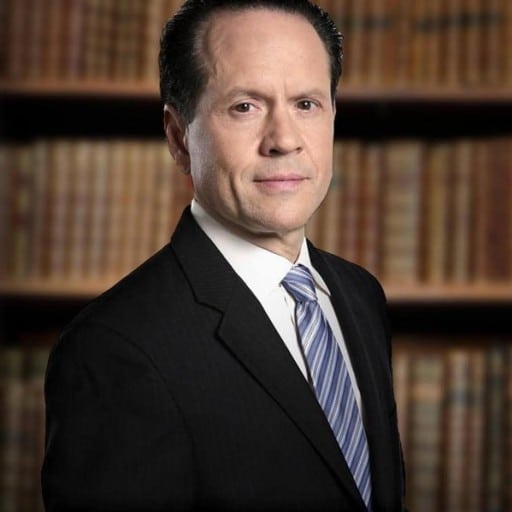
Jack G. Bernstein, ESQ.
Jack G. Bernstein, Esq., is a seasoned Miami personal injury lawyer who started his law practice in 1983. A detail‑oriented legal strategist with decades of experience in representing victims of auto, truck, motorcycle and slip‑and‑fall accidents, he is currently a member of the Florida Bar Association. He is admitted to practice before the State and Federal Courts of Florida, offering free, no‑obligation case reviews to injured clients and advocating for maximum compensation in car accidents, wrongful death, catastrophic injury cases and more.