
Car Accidents Caused by Seizures and Medical Conditions
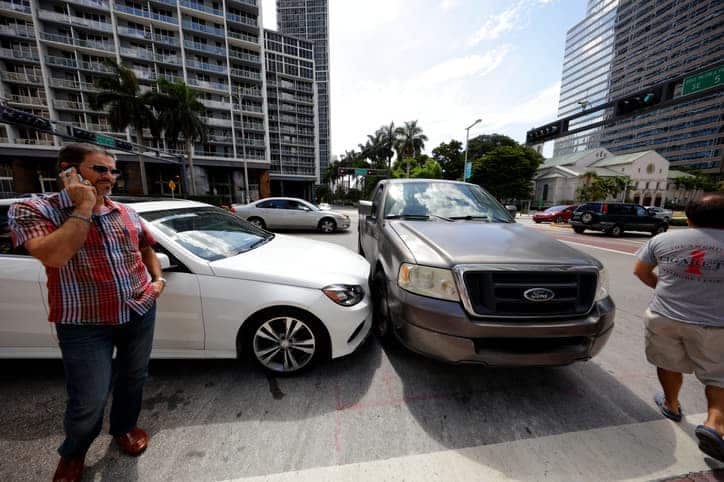
When someone makes a driving error that causes a driving accident, the driver may be legally liable to the victims for their injuries. However, what happens when the accident occurs because of a medical emergency? In Florida, the answer isn’t always immediately apparent.
Here’s what you should know about medical condition crashes, including seizure while driving accidents, from our Miami car accident lawyers.
What Medical Conditions Can Cause Car Crashes?
Medical conditions that impair vision, cognition, consciousness or motor control can significantly contribute to car crashes by reducing a driver’s ability to react safely. Common examples include sudden events like epileptic seizures, head injury, traumatic brain injury or heart issues, as well as chronic conditions affecting judgment or coordination. Here are key medical conditions linked to increased crash risk, based on established research.
| Medical Condition | How It Causes Crashes | Risk Examples |
| Epilepsy Seizures | Sudden loss of control or consciousness during a seizure | Highest association in older drivers; unexpected onset leads to veering off road |
| Cardiovascular Events (e.g., heart attack, arrhythmia) | Fainting or sudden incapacitation from irregular heartbeat | Common in older drivers; abrupt loss of vehicle control |
| Hypoglycemia (Diabetes-related) | Low blood sugar causing confusion, dizziness, or blackout | Elevated crash risk in insulin-dependent diabetics |
| Stroke or Transient Ischemic Attack | Sudden weakness, vision loss, or impaired coordination | Affects one side of body, leading to swerving |
| Syncope (Fainting) | Brief loss of consciousness from blood pressure drop | Highest odds ratio (4x) for crash culpability |
| Dementia/Alzheimer’s | Memory loss, poor judgment, and spatial disorientation | 2-18x higher crash risk; navigation errors |
| Sleep Disorders (e.g., Obstructive Sleep Apnea) | Daytime drowsiness and microsleeps | Reduced alertness mimics drunk driving |
Research on Seizure-Related Fatal Crashes
Seizures/epilepsy contributed to only 0.2% of US driver fatalities (86/44,027 from 1995-1997), far less than alcohol (156x more likely in car crashes), though seizure-related car accidents remain a serious risk for epilepsy patients. Driver fatality rates are 2.6x higher in the general population than for patients with epilepsy, yet generalized epileptic seizures can cause sudden blackouts, leading to loss of vehicle control in seizure-related accidents.
Longer driving restrictions (6-12 months post-seizure, varying by state like Florida’s 2-year seizure-free rule) link to lower crash rates; drivers must notify the DMV and adhere to seizure control via medication to drive safely.
What Does This Mean for Epilepsy Patients?
Epilepsy patients should take meds as prescribed to achieve seizure-free status, avoid triggers like drink alcohol, fatigue, or fever that can trigger seizures, and report breakthrough seizures immediately—seizures can recur even after long seizure-free periods, raising risks in seizure-related car crashes.
A history of seizures often results in higher auto insurance premiums; to manage risks, follow state guidelines, get doctor clearance, and understand that liability becomes complex if a known disorder leads to a collision. In rare cases of uncontrolled seizures causing serious injuries or death (e.g., while driving), drivers may be held liable if the event was foreseeable.
Seizures after TBI from head injury are treatable in 70-80% of cases with anticonvulsants, helping control seizures and improve overall quality of life for those pursuing compensation post-accident.
Can a Person Who Has Seizures Drive?
If you live in Florida, you can still operate a vehicle even if you have seizures. However, you must meet specific medical and legal requirements set by the Florida Department of Highway Safety and Motor Vehicles.
Under state law, you must report medical conditions, including seizures disorder or epilepsy, that might increase the risk factors and affect your ability to safely operate a vehicle when you are behind the steering wheel. Drivers can be held legally responsible for accidents if they drive knowing they have seizures without following medical advice or state laws.
You’ll need to undergo an evaluation by a licensed physician, and have a medical evaluation form (HSMV 72115) submitted to the Florida Highway Safety and Motor Vehicles Department. If a driver with epilepsy causes an accident, they may face increased civil liability if they failed to report their condition to the DMV or did not meet probationary requirements.
Patients on antiepileptic drugs (AEDs) can often drive. If your doctor clears you to be seizure free during treatment, you’ll likely receive a restricted license that indicates you’re only allowed to operate a vehicle under certain conditions (driving restrictions) for public safety. This might include short distances or only during daylight hours.
If you have a seizure while you are licensed, you must stop driving immediately and report it. Your driver’s license will be suspended until you get medical clearance. If you don’t agree with the decision, you can request a hearing to appeal.
What happens in case of seizure related Car Accident?
When a medical condition, like a seizure, causes a car accident, the person who has the medical event may or may not be responsible to the victim for their injuries.
Whether the person with the medical issue has legal liability to the victim depends on whether the event was foreseeable. State laws may impact what happens in a seizure caused car accident.
Medical Emergency Car Accident
A medical emergency car accident is an accident that occurs because of a sudden medical event. The emergency causes the driver to lose control of the vehicle and cause an accident.
Whether the driver is responsible for a medical emergency car accident depends on state law. In most states, the driver is responsible if the accident was reasonably foreseeable because of advanced knowledge of the medical condition.
Common Medical Conditions That Cause Car Accidents
The general rule is that Florida is a no-fault state. That means that each party is responsible for their own damages for minor car accidents. When serious accidents occur, the party who causes the accident may be liable for their injuries.
The standard is negligence — when a driver doesn’t exercise a reasonable amount of care, they’re liable when serious injuries occur. Generally, a driving error on the road amounts to negligence.
However, when the driving mistake happens because of a medical condition, the answer isn’t so clear. To be legally liable to victims for their injuries and damages, the medical event must have been reasonably foreseeable.
The driver must have had some indication that the medical event was a possibility. A driver isn’t liable to victims for unforeseen events. Instead, they’re only responsible if they knew that the medical event was a reasonable possibility.
Laws for Medical Event Car Accident Liability
The Florida standard for medical event car accident liability is whether the accident was reasonably foreseeable.
Once the victim shows that the crash occurred because of the negligent conduct of the other driver, it’s up to the other driver to present the sudden medical event defense.
The steps to proving the defense are:
- A driver suffers a loss of consciousness or incapacitation.
- The loss of consciousness or incapacitation doesn’t occur because of negligent conduct on the part of the driver. In other words, the driver didn’t have any reason to know that the medical event was a possibility.
- The loss of consciousness was sudden. The driver couldn’t have seen it coming.
- There was no reason that the driver should have known to take action to prevent the loss of consciousness. They may not be aware of any facts that would make a reasonable person think the accident was a possibility.
If they can prove their defense, the driver is relieved of legal liability for the accident. The driver must prove every element of the medical emergency defense.
Who Decides If the Medical Event Defense Applies to a Car Accident?
It’s up to the jury to decide if the medical event defense applies to a car accident. Whether the medical event occurred, and whether it was foreseeable, depends on the facts of the case. Often, deciding the case requires a detailed look at the medical evidence, the testimony of the parties, and how the accident occurred. Ultimately, the jury makes the final decision of whether the driver has met the elements of the medical event defense.
Feagle v. Purvis and the Medical Emergency Exception
One well-known Florida case that explains how the medical emergency exception works is the Feagle v. Purvis case. The defendant had a known heart problem. He declined diagnostic testing for the heart problem on six different occasions. However, the doctor didn’t place any restrictions on the defendant driving.
One day, the defendant drove a boat. While driving, he suffered a heart attack and died. The boat flew out of control and hit a victim.
The court used the Feagle case to explain the elements of a medical emergency defense. The court made clear that refusing diagnostic testing doesn’t automatically mean negligence. They said that it’s up to the jury to decide whether the medical defense applies.
Contact Our Florida Attorneys for Car Accidents
Have you been in a car accident? Was a medical event involved? You have rights.
Car accidents that involve medical events are complex. You must work diligently to gather the evidence and prepare the legal arguments to win your case. Our attorneys have more than three decades of experience fighting for car accident victims.
Let us fight for you until you have the compensation that you deserve. Don’t wait any longer.
Call us today for a free consultation about your case. (call Bernstein & Maryanoff, Injury Attorneys).
Frequently Asked Questions
Disclaimer: This blog is published by Bernstein & Maryanoff Injury Attorneys for general informational purposes only. Nothing here is legal advice, and reading it does not create an attorney-client relationship with our firm. Laws and regulations vary by state. Always speak with a licensed attorney in your jurisdiction to understand how they apply to your specific situation. Past case results do not guarantee future outcomes. Every case is unique and depends on its own facts and circumstances. Please do not share sensitive personal information or case details in public comments or messages. For advice about your case, call us at (800) 429-4529.
About the Attorney

Jack G. Bernstein, ESQ.
Jack G. Bernstein, Esq., is a seasoned Miami personal injury lawyer who started his law practice in 1983. A detail‑oriented legal strategist with decades of experience in representing victims of auto, truck, motorcycle and slip‑and‑fall accidents, he is currently a member of the Florida Bar Association. He is admitted to practice before the State and Federal Courts of Florida, offering free, no‑obligation case reviews to injured clients and advocating for maximum compensation in car accidents, wrongful death, catastrophic injury cases and more.